Sequences

Energy bursts

OPENINGS
Spring is the season of anticipation, with glimmers of the life and activity vibrating all around us. We have become so evolved that we sometimes forget that we’re part of nature – and like all nature we too are affected by the change in season. You might find at this time of year your energy levels go from extremes with the changing weather. We turn in on ourselves in the winter times and the body naturally looks for forward bends, hip openers and warming twists in our practice. When the days start to get brighter, backbends and heart opening asana reawaken the energy levels and boost the circulation.

BACKBENDS
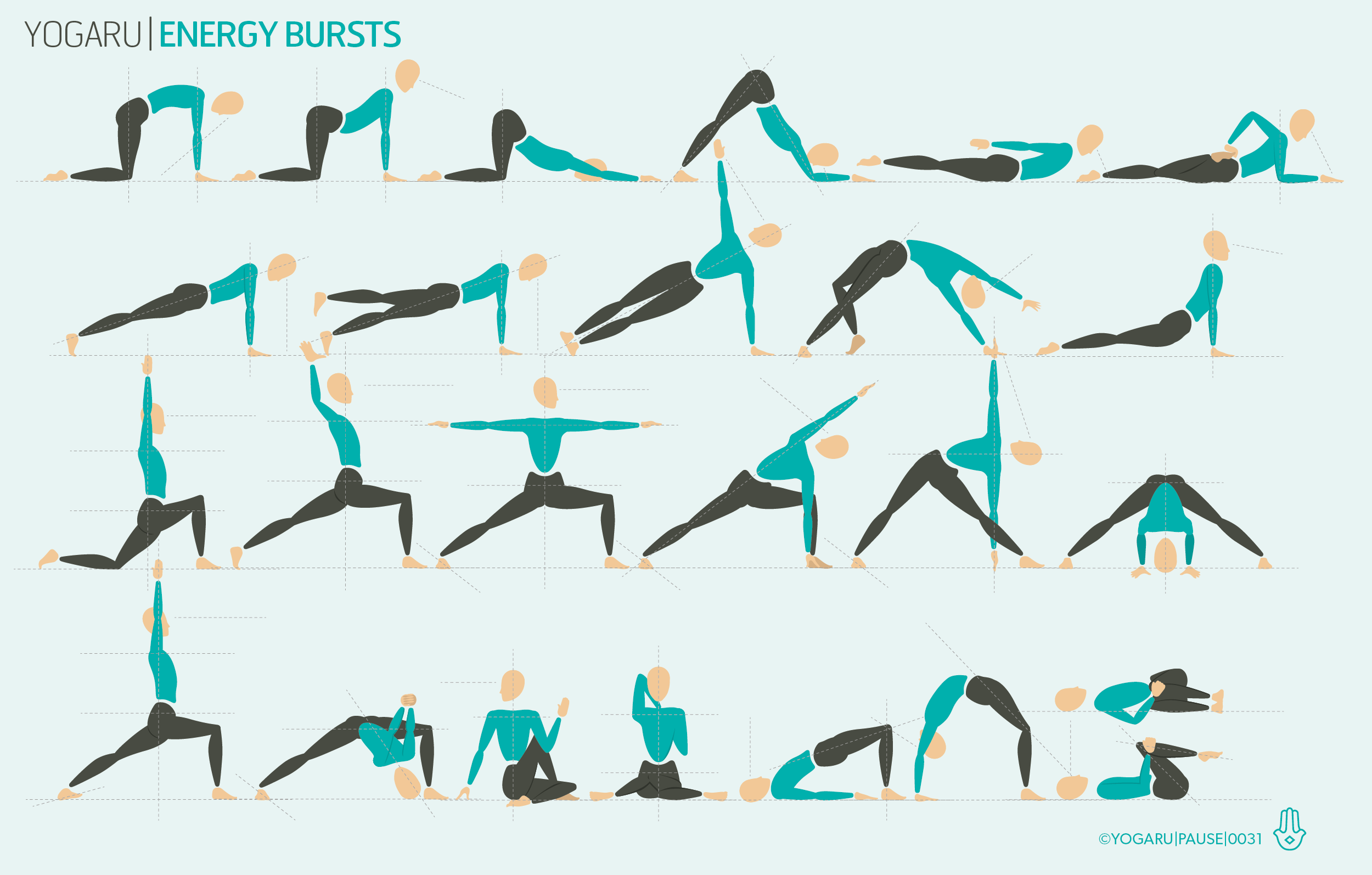
Backbends energise and open the body up after the winter months of curling in to protect ourselves from the cold. They also stimulate the digestive system; stretch and expand the lungs and help relieve chronic pain. The depth of our breath can be challenged over the winter months, with head colds and chest infections, and needs to be consciously stretched and opened again to get the health benefits of good breath. This is a great time to incorporate Pranayama breath work at the start or the end of your practice. Or if Pranayama isn’t part of your practice, pay particular attention to your breath as you work through this backbending sequence. Click this link to get a full list of backbends.

To save the images for personal use click and hold down the image until the ‘save image’ option appears; on Mac hold down ‘control’ and click the image to get the option box; on PC right click on the image to get the option box. Scroll down in the ‘option box’ and click ‘save image’.

Ruth Delahunty Yogaru

Twist cleanse

SPRING CLEAN
As we move from darkness to small glimmers of brighter days, the body naturally looks to shake off its winter layers and open up to new beginnings. Twists spring clean the system, create natural heat and energy, and relieve tension, stress and anxiety. They also help maintain a healthy spine by keeping the connective tissue strong, supple and lubricated.

This is also my go to sequence I use when traveling. My gut, like many others, doesn’t travel well! Airports, air conditioning, dehydration and a change in routine slow my system down to a halt – leaving me feeling uncomfortable, sluggish and tired. I try to start each day, when I’m away from home, with a gentle practice that includes lots of twists. Even if I only manage ten minutes, I find it wake the digestive system up and helps to keep everything moving.

Keep an eye out on my Nourish blog for an article on gut health when traveling in the coming months.

TWISTS
Twists massage all the organs of the central body – aiding maximum nutrition absorption in the digestive system and toxin elimination through the bowel, liver and kidneys. When we twists we constrict the blood flow, and in releasing the twist a surge of blood rushes back – bringing with it a fresh supply of oxygen and flushes out the system.

When practising we twist to the right first, to stimulate the ascending colon, then twist to the left after, to stimulate the descending colon – aiding regular elimination and toxin removal from the body.

Twists also increase the metabolism and boost the immune system. In yoga philosophy texts it’s said that twists ‘destroy disease’ – considering 80% of our immune system is located in the gut, it makes sense that they are a very powerful tool to fight disease. Click this link to get a full list of twists.

The sequence above is an invaluable tool to keep with you when traveling or to help your body adjust to seasonal changes throughout the year. To read more about gut health have a look at The Second Brain sequence, and the Immune System Boost sequence which also incorporates plenty of twists and backbends.

To save the images for personal use click and hold down the image until the ‘save image’ option appears; on Mac hold down ‘control’ and click the image to get the option box; on PC right click on the image to get the option box. Scroll down in the ‘option box’ and click ‘save image’.

Ruth Delahunty Yogaru
Slow transitions flow

JOINING THE DOTS
Whether you come to your mat once a week, everyday, or somewhere in between – we all recognise the benefits the practice of yoga brings to our lives. It might be something subtle that is hard to explain or a life changing experience. When we put time aside to practice and invest in our well-being, it’s good to feel that we’re getting the best out of our time on the mat. Yoga is a continuous flow of postures, but often we forget that the transitions from one asana to another are just as important as the asana themselves. By bringing your attention to slow and controlled transitions, we thread the asana together and help cultivate a meditative flow, which helps quieten the mind and move the attention inwards. You often see students create beautiful asana (within the ability of their bodies) but their method of moving to and from the next asana loses all sense of mindfulness and breath awareness. To get the most of your time on your mat, extend through your limbs and move with intention and awareness of where they are going next. Moving in such a way reminds us that yoga is a lifelong journey not a destination with an end point.

Moving slowly, in and out of the asana, is safer, builds body awareness and is more challenging for the muscles than relying purely on momentum to get you from A to B. You might also notice your alignment improves when you consider the journey – reaching to find length in the spine; extending through your fingertips; feeling the rotation in the hip joint. When we rush through our transitions we miss the in between moments and the opportunities to be ‘moved by the breath’.

PAUSE_0028_B.png

SLOW FLOW IN YOUR PRACTICE
As the pace of life speeds up around us our minds work overtime to keep up with all the overload of information. Slowing down our practice helps bring the mind to a quieter state and trigger the parasympathetic nervous system (relaxation reflex).

As someone who rushes through life, frequently taking on more tasks than hours in the day, I sometimes find it hard to consciously slow my movements down in my practice. But I’m all too aware that I’m the very type of person that should slow down the pace as much as is comfortable, to counteract my default mode. You might find some resistance in the change of pace, but the benefits both physical and mental are well worth exploring. Moving mindfully, with control, starts to peel away the layers of clutter in the mind, and gradually you start to feel a deep sense of calm and relaxation – releasing tension, stress and anxiety. A consistent practice rewires the brain to be able to access this calmer mind frame when faced with challenging moments.

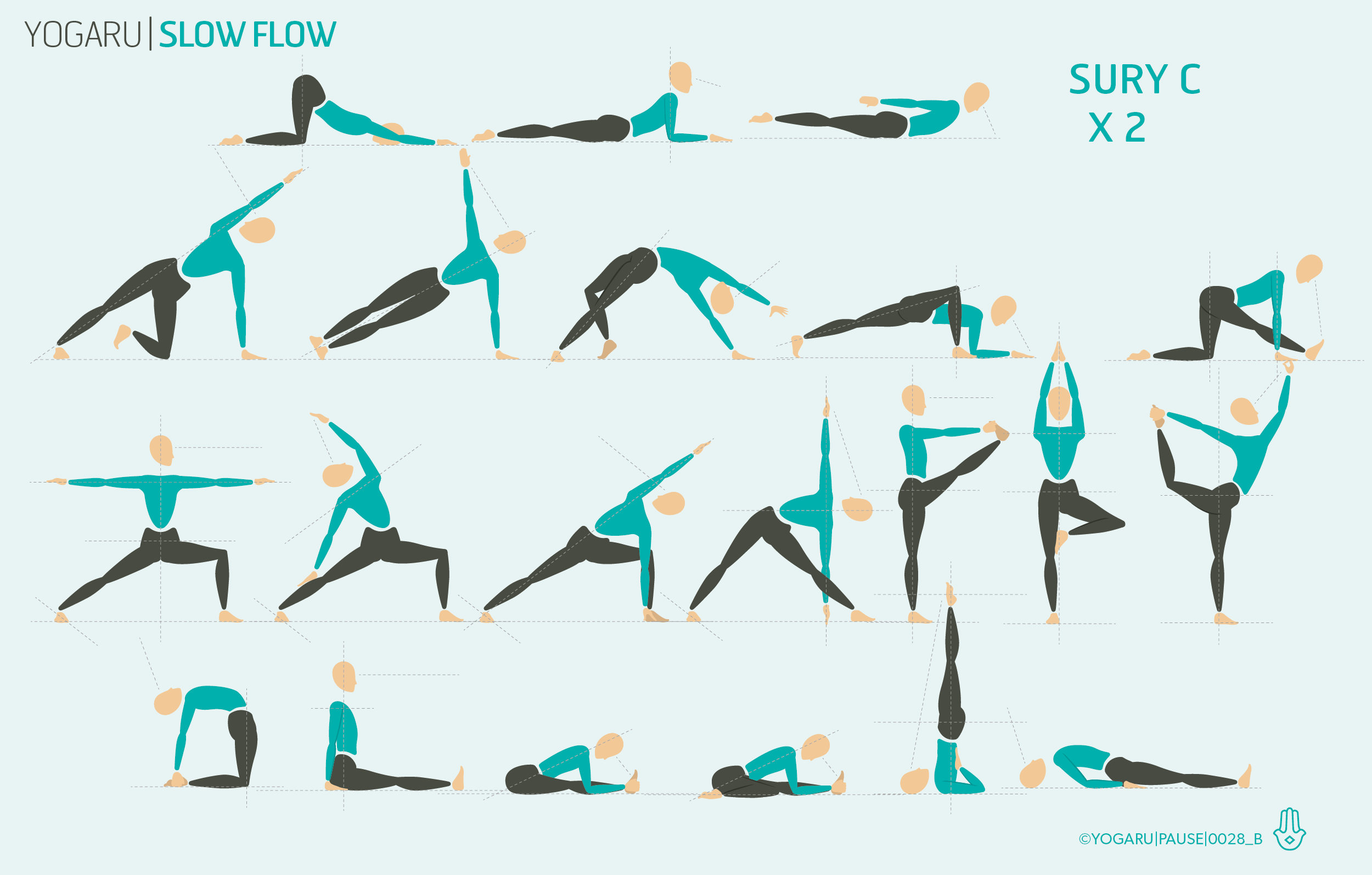
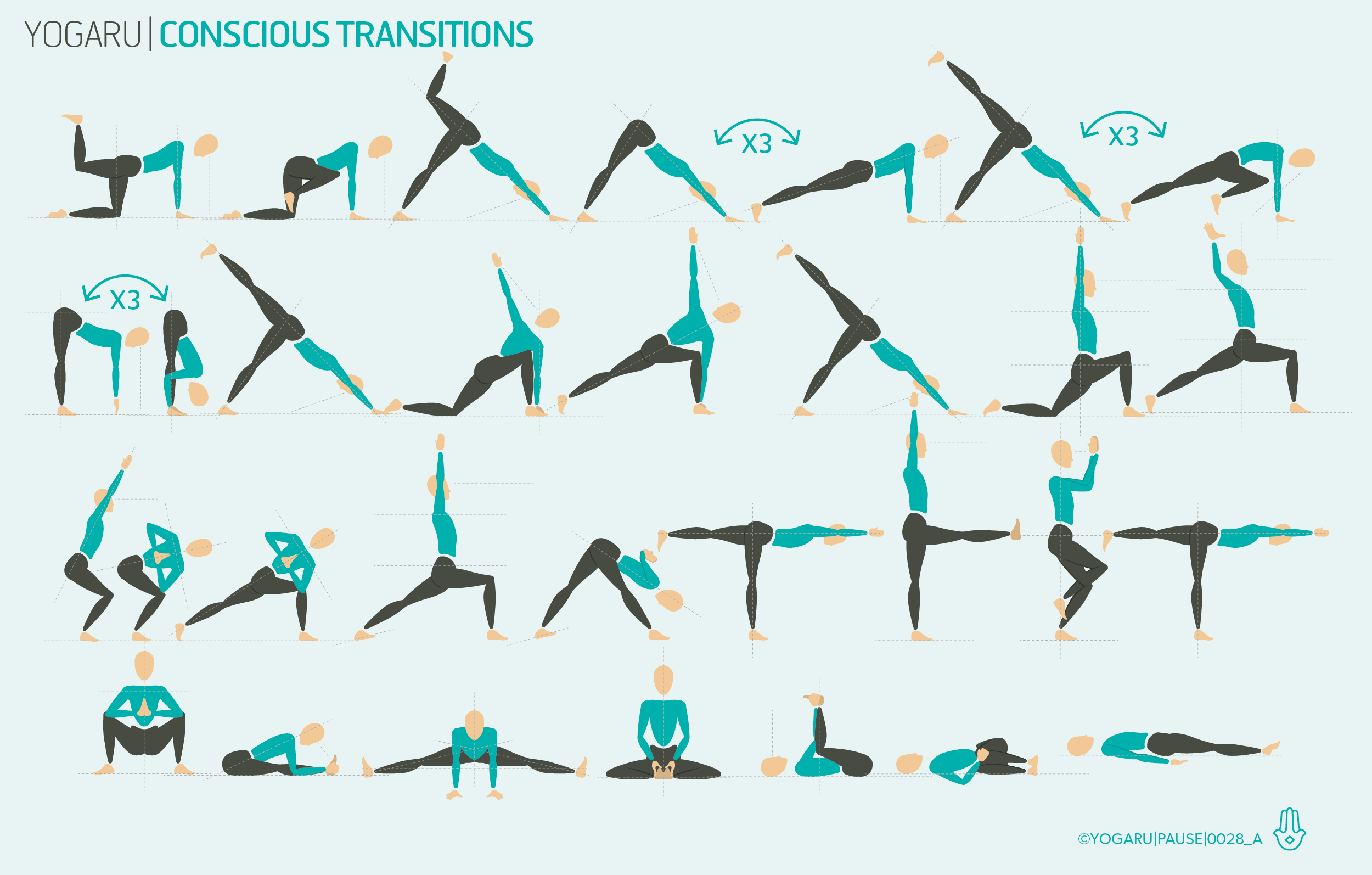
Try the two sequences above, focusing on your journey in and out of the asana. Experiment with methods of transitioning that suit your strength and ability, remembering to move with the breath rather than a held breath. Be aware of maintaining length in your limbs and minimise ‘popping up’ from asana like downward dog to your standing asana. It can sometimes help to video yourself on your phone to see how you transition. Checking to see do you have any habitual pattern in your transitions that you need to be conscious of or if you are disconnected from your external limbs.

To save the images for personal use click and hold down the image until the ‘save image’ option appears; on Mac hold down ‘control’ and click the image to get the option box; on PC right click on the image to get the option box. Scroll down in the ‘option box’ and click ‘save image’.

Ruth Delahunty Yogaru