
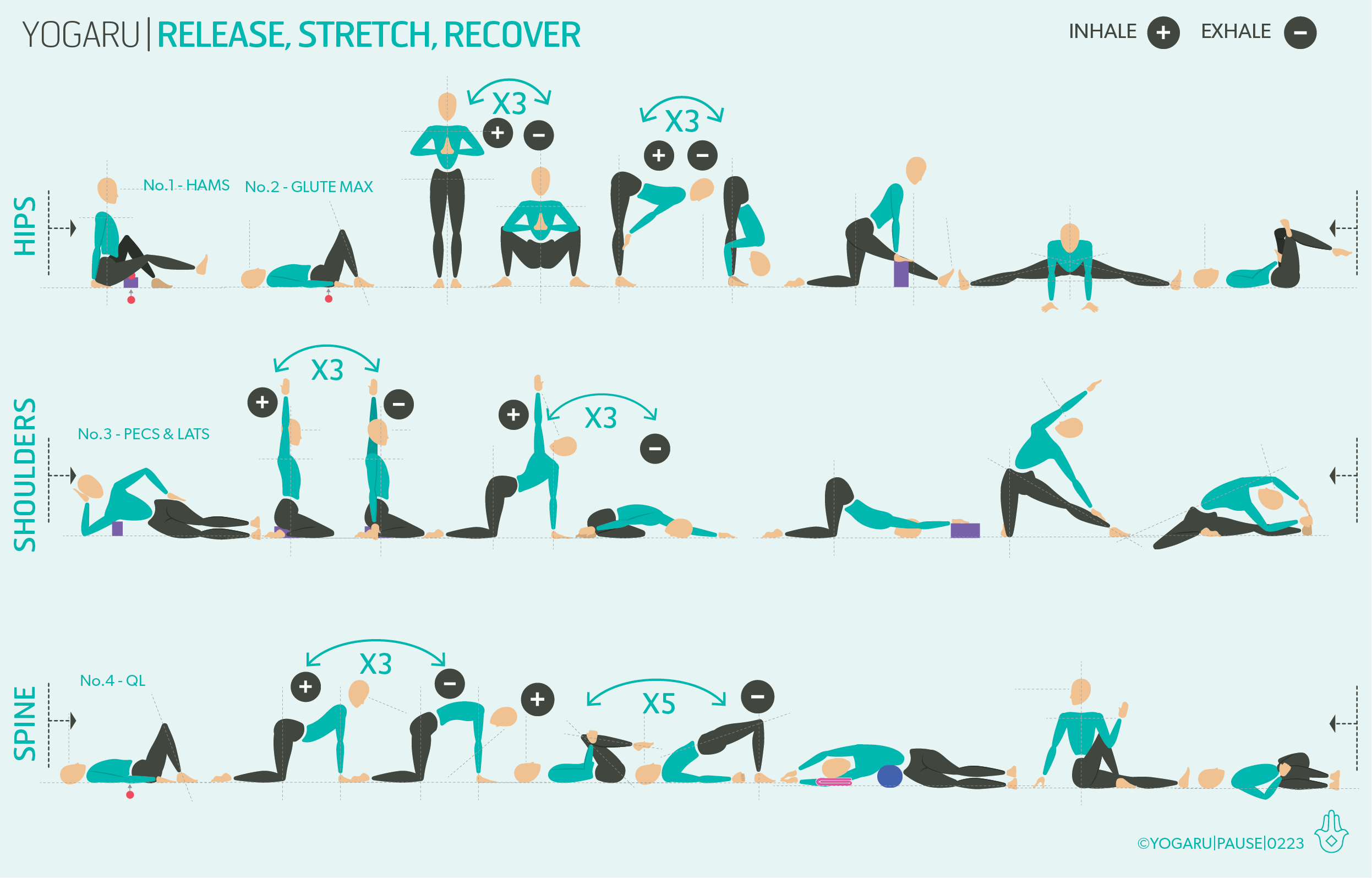
Myofascial release

Posture stacking

WHY POSTURE MATTERS
Poor posture doesn’t just affect how we look – it influences how we breathe, move, balance, and age. Over time, it can contribute to back pain, neck tension, reduced mobility, and even low energy levels.

Modern life often works against good posture. Hours spent sitting, driving, scrolling, and working at desks can reinforce poor movement habits without us even realising it.

Poor posture exists on a spectrum – from subtle asymmetries that may never cause problems to more noticeable misalignments that can lead to pain and dysfunction over time.

Posture plays an important role in overall wellbeing, and awareness is the first step toward improving it. To observe your own posture, try catching yourself before you automatically correct it. Notice whether you tend to have forward head carriage, rounded shoulders, a rounded upper back, an overly arched or flattened lower back, or knees and feet that turn excessively inward or outward.

It can be difficult to assess ourselves objectively, so ask a friend or partner to observe how you move throughout your normal day and share any patterns they notice. That feedback can be incredibly valuable. Once you identify where your body feels tight, weak, or compensating, you can begin addressing what you specifically need to improve your posture.

POSTURE BRICKS
Good posture doesn’t come naturally to most people – it’s a skill built through awareness, mobility, strength and consistent practice.

Think of posture as the architecture of your body. Gravity places constant load on this structure and, over time, it will often find weak points. Our goal is to maintain this architecture so it stays resilient, strong and capable for years to come.

A concept I teach all of my students is posture stacking. Imagine your body is made up of bricks: feet, ankles, knees, pelvis, shoulders and head. When these bricks stack efficiently on top of one another, your body distributes load properly and moves with ease.

When one brick shifts out of place, everything above and below it must compensate. If the pelvis tips forward, the spine loses its natural curves and load gets pushed into areas that weren’t designed to carry it. If the shoulders round forward, the head often follows – placing extra strain on the neck and upper back.

I encourage my students to observe their posture stacking throughout class so they can bring that awareness into daily life – how they sit at their desk, walk, climb stairs, carry shopping and move through their day.

Posture stacking isn’t limited to standing still. You can explore it throughout yoga poses and dynamic transitions too. In High Lunge check whether the pelvis is upright and steady. In Warrior II notice whether one shoulder is drifting forward. During transitions, use strength and control to move slowly and with awareness. Yoga gives us endless opportunities to practise better alignment in motion.

YOGA FOR GOOD POSTURE 
One of yoga’s greatest benefits is that it strengthens the muscles that support posture while improving body awareness. This awareness – known as proprioception – is your ability to sense where your body is in space, and it plays a huge role in how efficiently you move.

Strong posture requires a balance of mobility, stability and strength – and yoga develops all three. While many muscles contribute to good posture, some of the key players include the gluteus medius and gluteus maximus, which stabilise the hips; the transverse abdominis (TVA), which supports the lower back; the erectors, which help keep the spine upright; and the lower trapezius and rhomboids, which support the upper back and shoulders.

Many yoga poses – particularly standing poses like Virabhadrasana II (Warrior II) and Ashta Chandrasana (High Lunge) – play an important role in strengthening the hips and glutes, helping the pelvis stay stable so the spine doesn’t have to compensate.

Backbends against gravity, such as Salabhasana (Locust Pose) and Ardha Uttanasana (Half Forward Fold), strengthen the muscles along the spine and upper back, helping to counteract the rounded posture many of us develop from desk work and looking down at phones.

Yoga also offers a wide variety of arm positions that help open the front of the chest while strengthening the back of the shoulders. This helps anchor the shoulder blades more effectively onto the ribcage – an essential component of maintaining an upright, supported upper-body posture.

The feet are often overlooked, yet they’re the foundation of posture. Each foot contains 26 bones and over 100 muscles, tendons and ligaments that absorb force, create stability and keep us balanced. That’s why I include balance work in many of my sequences – so your body becomes better at adapting to everyday challenges like uneven ground, sudden movement or simply moving through life with more confidence.

Stress affects posture too. When we feel overwhelmed, we often collapse forward, breathe shallowly and physically shrink. Yoga helps interrupt that pattern through movement, breath and nervous system regulation. Sometimes simply opening the chest and standing taller can shift both your posture and your mindset.

POSTURE CHECK INS
Throughout your day, check in with your posture using these simple cues.

Think of your pelvis as a bowl carrying precious liquid that you don’t want to spill. If you feel your pelvis tipping backward while sitting or standing, gently rock forward on your sit bones to restack it.

Then notice your chest. If it feels collapsed, imagine a string attached to the centre of your chest gently lifting it forward and upward, helping your ribs and shoulders stack back over your pelvis.

Small corrections repeated consistently can create lasting change.

Good posture helps you move with less pain, breathe more efficiently, maintain independence as you age, improve athletic performance, reduce tension headaches, support joint health and feel stronger and more confident. Most importantly, it helps you move through life with greater ease.

Good posture = mobility + stability + strength + balance + body awareness.

That’s exactly what we work on in my sequences and yoga classes – helping you build better posture for life, not just for the yoga mat.

Join me in class, use the code YOGARU50, and start strengthening your posture from the ground up.

EXPLORING POSTURE STACKING IN YOUR PRACTICE
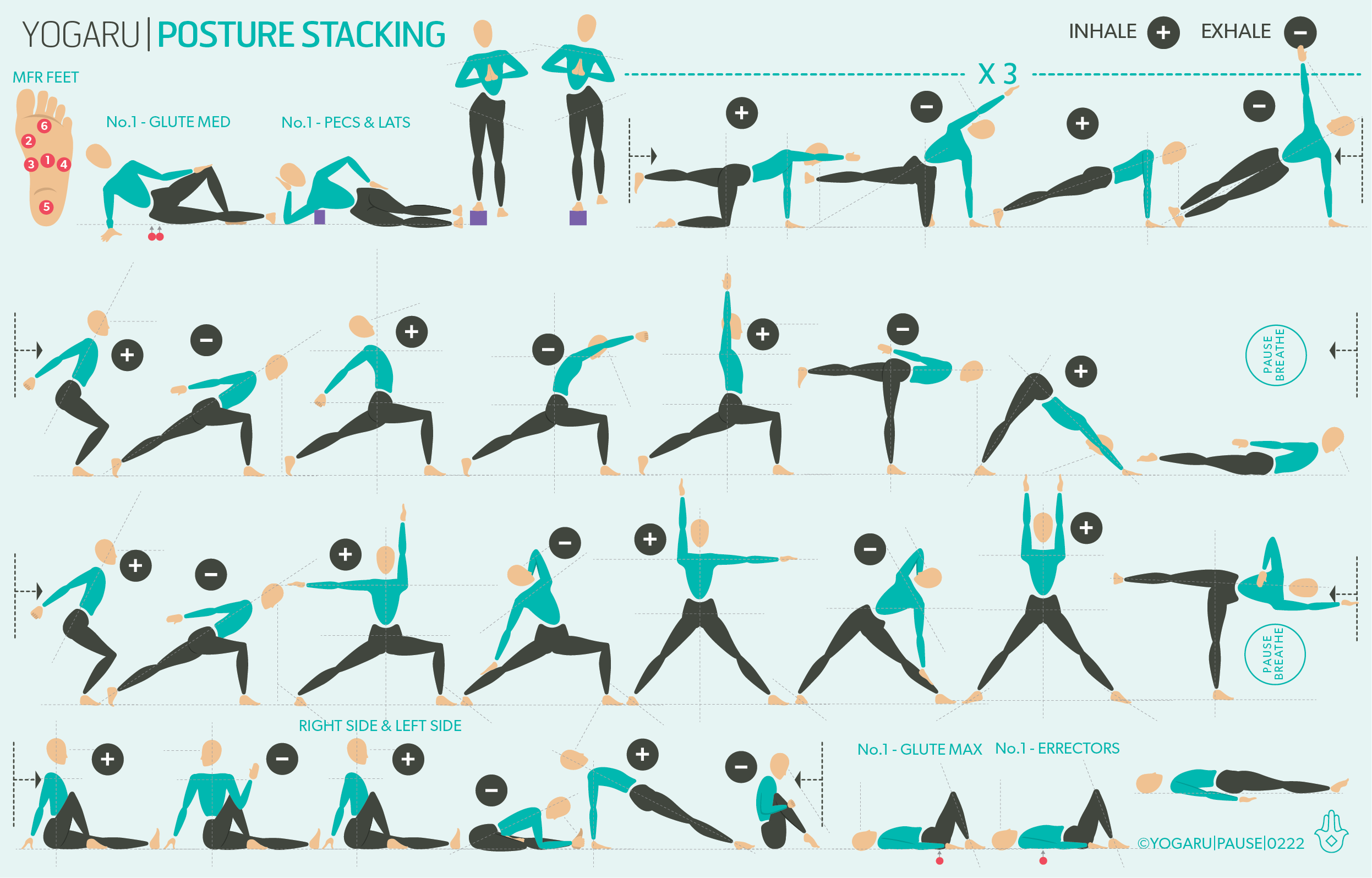
This sequence focuses on stretching the pecs, upper trapezius, hip flexors, quads and lats; and strengthening the glutes, TVA, erectors, lower trapezius and rhomboids. It gets started with MFR to wake up some of the postural muscles and some standing balance drills which will immediately wake up all the balancing and postural muscles. As you are doing your balance drills check in with your posture stacking. 

The second and third rows are your two main standing fires. I recommend you flow through them once with a few breaths per pose and then flow through them another 1-3 times depending on your time with the breath count indicated in the sequence. As you flow through the standing flow check your posture bricks and notice your main postural muscles listed above switching on as you work on strengthening your posture.

Finally, the sequence brings you down to the ground for your cool-down and a final opportunity to try out posture stacking from a seated position.

ALIGNMENT CUES
Have a read of the tips below and either print out the sequence or save it onto your device:

  • Use your breath to slow down your movement and squeeze every bit of goodness out of each pose. Inhale is indicated with a ‘+’, exhale is a ‘-”.

  • As you move through the sequence keep bringing your attention back to your posture stacking.

  • Repeat the two standing flows for two or three rounds per side, stepping right leg forward first then left leg.

  • Give yourself at least 5 mins in Savasana to transition back into your day.

To save the images for personal use click and hold down the image until the ‘save image’ option appears; on Mac hold down ‘control’ and click the image to get the option box; on PC right click on the image to get the option box. Scroll down in the ‘option box’ and click ‘save image’.

Ruth Delahunty Yogaru
Winter evenings flow

YOUR EVENING RESET
After a full day of activity, decision-making, and stimulation, it’s normal to feel mentally wired or physically tense. A gentle evening ritual helps release the day’s buildup and prepare your body and mind for rest. Moving with intention slows the nervous system, supports deeper sleep, and creates space to ease into relaxation.

Yoga is one of the most effective ways to wind down in the evening. Gentle movement, paired with conscious breathing, activates the parasympathetic nervous system – your body’s “rest and restore” mode. This response helps lower stress hormones, eases muscle tension, and creates a sense of calm that prepares you for sleep. Evening yoga often targets areas where stress accumulates, such as the spine, hips, shoulders, and jaw, gently encouraging release.

A consistent evening yoga practice supports your body’s natural circadian rhythm. It can enhance melatonin production, aid digestion, reduce inflammation, and ease you into a more restful and regenerative sleep. Even just 15 minutes of slow, mindful movement can become a powerful signal that your day is ending and it's time to relax and reset.

EVENING YOGA IN WINTER
As daylight fades early and temperatures drop, the body naturally turns inward. Similar to nature, this is a season for conservation and restoration. An evening yoga practice in the winter months becomes a powerful way to warm gently, settle deeply, and support resilient rest.

Cold weather can leave muscles feeling stiff and joints less mobile, especially if you’ve been sitting more or bracing against the chilly, wet weather. Gentle breath led movement gradually builds heat, supports circulation, nourishes connective tissue, and helps fascia stay supple during colder months. Unlike summer’s need to cool down, winter evenings benefit from contained, cocooning postures – think blankets, bolsters, and layers that allow you to soften without losing heat.

Breathwork is especially powerful in winter. Slow nasal breathing gently warms the air before it enters the body, while extended exhales activate the parasympathetic nervous system, easing you out of the day’s demands. Deep belly breathing supports digestion and signals safety and calm to the nervous system.

Your winter evening practice is less about output and more about nourishment. Dim the lights, wrap yourself in warmth, move slowly and intentionally. Let your mat become your comfort blanket against chilly winter days. When you honour the body’s need for steadiness and rest in winter, you cultivate resilience that carries you through to spring – you’ll waken from winter hibernation feeling restored and nourished.

EXPLORING WINTER EVENINGS FLOW IN YOUR PRACTICE
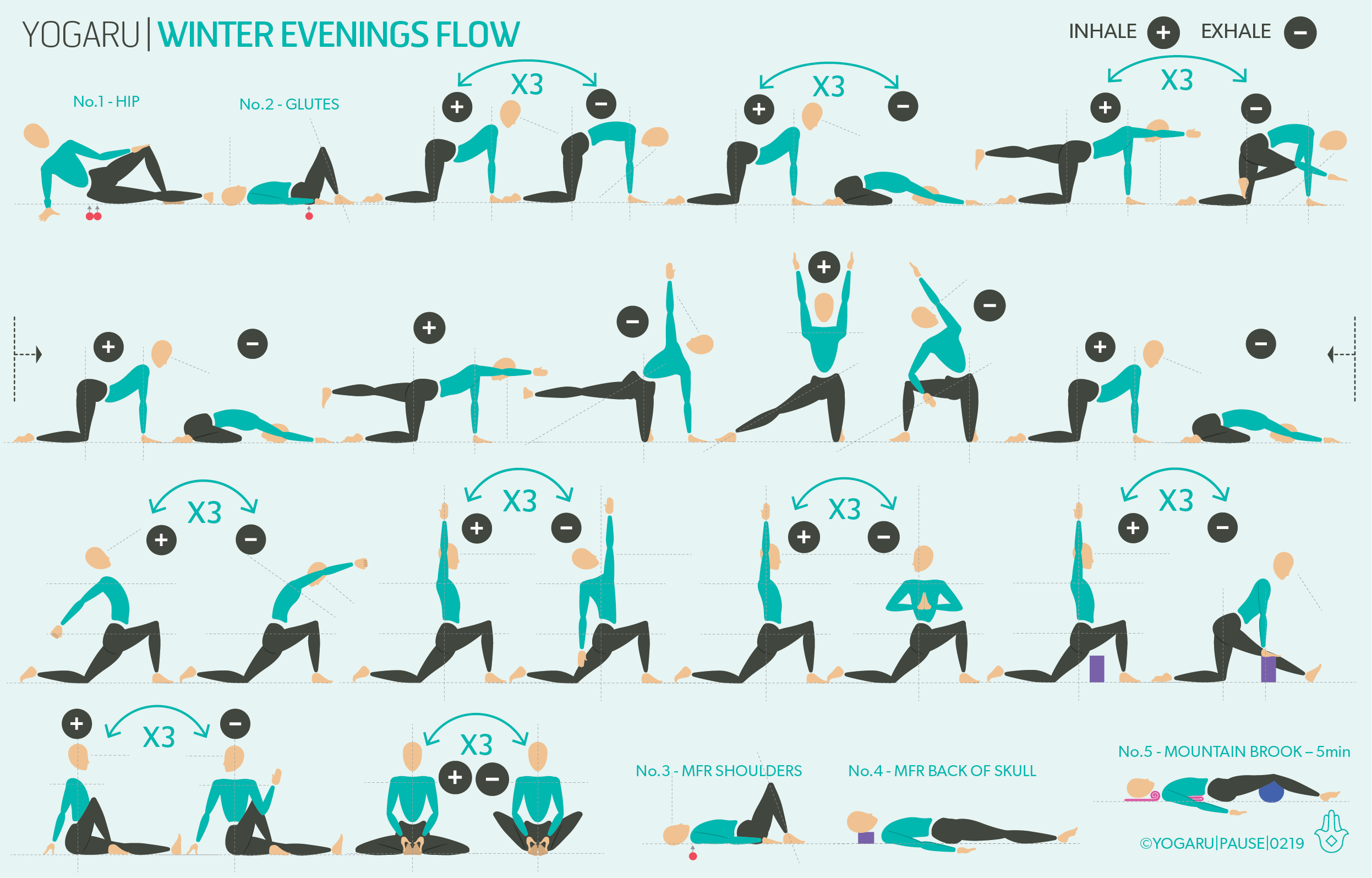
This gentle evening practice stays close to the ground to help dial down your nervous system and prepare your body for sleep.

Row One begins with self-myofascial release (MFR) for the sides and back of the hips. Hips often feel achy and stiff by the end of the day, whether you’ve been active or sitting for long periods. Hip tension can also contribute to unsettled sleep. MFR helps rehydrate the tissues and ease built-up tension, making it more comfortable to settle and rest at night.

Rows One and Two focus on gentle mobility for the hips, spine, and shoulders, releasing the accumulated tension of the day. The movements are slow and steady, supporting both recovery and nervous system regulation.

Row Three keeps you low to the ground but introduces a slightly wider range of movement. If you’re feeling exhausted, you can simply repeat Row Two and skip this section. If you’re still carrying restlessness or mental busyness from the day, Row Three offers just enough variety to help discharge that energy and quiet the mind.

The Final Row brings you into seated shapes, includes targeted shoulder MFR for common areas of stiffness, and finishes with a soothing restorative pose to ease you fully toward sleep.

ALIGNMENT CUES
Below are the MFR and restorative techniques used in this sequence. The props you’ll need are:
1 x bolster - or 2 towels, wrapped around a horizontally rolled pillow and tied to secure.
2 x yoga blankets - or any wool, thick cotton or fleece blanket with density.
2 x yoga bricks - or two thick similar sized dictionaries.

Restorative
MFR

No.1 - Hips (gluteus medius)
Compression - from side lying up on your forearm, stack 2 x balls behind your frontal hip bone on your outer hip, gently press down with an inhale and release on the exhale x 5 breaths.
Sheer - slowly lift and lower your leg x 5.
Roll & cross fibre - roll up and down on your outer hip.

No.2 - Glutes (gluteus maximus & piriformis)
Compression - from supine with knees bent, place 2 x balls in the centre of each buttock muscle, gently press down with an inhale and release on the exhale x 5 breaths.
Sheer - slowly lift and lower one knee at a time towards your chest x 5. Place your right foot on your left knee and lower and lift your right knee.
Roll & cross fibre - roll around the whole buttocks area.

No.3 - Shoulders (trapezius & supraspinatus)
Compression - from supine with knees bent, place 2 x balls in the centre of each upper shoulder, gently press down with an inhale and release on the exhale x 5 breaths.
Sheer - slowly circle arms overhead and back to the ground x 5. 

No.4 - Back of skull 
Lie on your back and place a brick on its lowest high just below the curve at the back of your skull (occipital ridge). Extend your legs out, arms slightly away from your body, palms facing up. Legs slightly apart and feet fall out to the side, soften your shoulder, back of the neck long. Gently roll your head from side to side to ease out tension in the muscles at the back of the skull. Roll your head mid way to your right, pause and make small circles, repeat on the left side. Remove the brick, soften the muscles across your forehead, your temples, the back of your skull. Let the whole body become heavy and melt into the support of the ground.

Restorative
No.5 - Mountain brook

Half roll a four fold blanket and place it at the top of your mat. Accordion fold the other blanket and place it below your top blanket where your shoulder blades will lie. Place the bolster towards the bottom of your mat where your knees will be. Lie supine on your back, nestle the rolled part of the top blanket in the curve of your neck, place the accordion folded blanket under the lower tips of your shoulder blades and the bolster under the creases of your knees. Legs and arms extended, palms facing up, feet fall out to the side. Feel the rise and fall of the props supporting your back body.

To save the images for personal use click and hold down the image until the ‘save image’ option appears; on Mac hold down ‘control’ and click the image to get the option box; on PC right click on the image to get the option box. Scroll down in the ‘option box’ and click ‘save image’.

Ruth Delahunty Yogaru
Winter mornings flow

YOUR MORNING RESET
After a night of rest, it’s common to wake up feeling a little stiff or sluggish. Gentle movement first thing in the morning helps shake off that heaviness, re-energise the body, and set the tone for a more grounded, vibrant day. Morning movement releases endorphins, increases oxygen flow, and boosts circulation – leaving you feeling more awake, clear-headed, and ready to meet the day.

Yoga is one of the most effective and accessible ways to get moving in the morning. It gently stretches and strengthens the entire body, mobilises the spine in all directions, and opens up the hips – especially helpful if you spend much of your day sitting. By focusing on key areas like the spine, hips, and shoulders, yoga helps relieve tension, improve posture, and support pain-free movement. This physical reset also uplifts your mood and cultivates a sense of emotional clarity and openness.

A consistent morning yoga practice does more than just wake you up. It supports digestion, balances hormones, boosts metabolism, and strengthens your immune system. Most importantly, it creates intentional space for self-care before the demands of the day begin – grounding your energy, aligning your body and mind, and helping you show up with more presence and resilience.

MORNING YOGA IN WINTER
Winter invites a more contemplative, inward rhythm — shorter days, cosy evenings at home, and a naturally slower pace of life. A morning yoga practice gently balances this seasonal slowing with steady, flowing movement that warms the body and clears the mind.

Standing poses, balance challenges and mindful core work build strength, heat and concentration. Fluid transitions, twists, gentle backbends and balance challenges boost circulation, increase energy and help wake up the thinking brain.

At the same time, winter is a season where we can honour the body’s instinct to hibernate. Gentle breathwork, hip openers and supported inversions allow us to soften and restore. Supporting yourself with consistent yoga practice during winter helps lay the foundations for a resilient immune and respiratory system, often under greater challenge at this time of year. This is not usually the time for deep backbends or strong inversions, but rather for practices that are warming, grounding and nourishing — moving slowly, like warm honey. 

Your winter morning practice can help you stay uplifted and positive through the darker, colder days. There is something quietly beautiful about stepping onto your mat and greeting the day as it slowly awakens in the early morning light.

EXPLORING WINTER MORNINGS FLOW IN YOUR PRACTICE
This sequence starts in the first row with MFR on the feet followed by breath led spine, shoulder and hip mobility to warm up the muscles and get circulation going. The second and third row are your standing flows, continuing with 3 in and 3 out beathe led flow. Take your time and transition from pose to pose with control. Each standing row starts with a balance challenge where you will take tree pose and gaze up, down, left, right. Remember to do this on both sides. Complete each full line with the right leg forward and then repeat the line with the left leg forward – this is one full round of the flow. For a longer practice you can repeat these two standing flows. The final row offers core work to complete your practice with some deep internal warmth and posture support for the day ahead.

Instead of ending in the traditional Savasana, the sequence closes with Samavritti Pranayama – equal breath – to focus the mind and regulate the nervous system. Morning breathwork sets you up for the day in the present moment and helps calm the mind from racing ahead to the next task.

ALIGNMENT CUES
Below are the MFR and pranayama techniques used in this sequence. The props you’ll need are:
1 x MFR balls - or 1 tennis ball.

MFR Feet
Compression -
from standing or seated, place 1 x ball at position No.1, gently press down with an inhale and release on the exhale x 5 breaths and move on to No.2. Continue to No.5.
Roll & cross fibre - with the toes on the ground place 1 x ball at No.5, roll the ball across your heel x 5. Place 1 x ball at No.6, roll the ball across the knuckles of your toes x 5. Place 1 x ball at No.6, roll in one direction from toes to heel x 5.
Scribble - roll and scribble across the sole of the foot. Repeat all steps on the other foot.

Pranayama
Sit in a comfortable position – cross legged, sitting up on a brick or straddling a bolster.  Inhale for the count of 4, exhale for the count of 4 x 3 rounds. Inhale for the count of 4, pause for 2, exhale for the count of 4, pause for 2 x 3 rounds. Inhale for the count of 4, pause for 4, exhale for the count of 4, pause for 4 x 3 rounds. 

To save the images for personal use click and hold down the image until the ‘save image’ option appears; on Mac hold down ‘control’ and click the image to get the option box; on PC right click on the image to get the option box. Scroll down in the ‘option box’ and click ‘save image’.

Ruth Delahunty Yogaru