
Sequences

Life balance

TIPPING POINTS
Keeping everything balanced in life can be quite the balancing act, pardon the pun. Life is like a seesaw with lots of ups and downs. There is always going to be degrees of tipping one way or the other and we have to consciously work on bringing it back to level. When you find you have slipped down to one end of the seesaw it can be quite challenging to get back to the fulcrum point. Which, after a busy period in September where I lost sight of balance, is where I find myself at the moment looking up the incline of the slide!

FINDING BALANCE IN YOUR PRACTICE
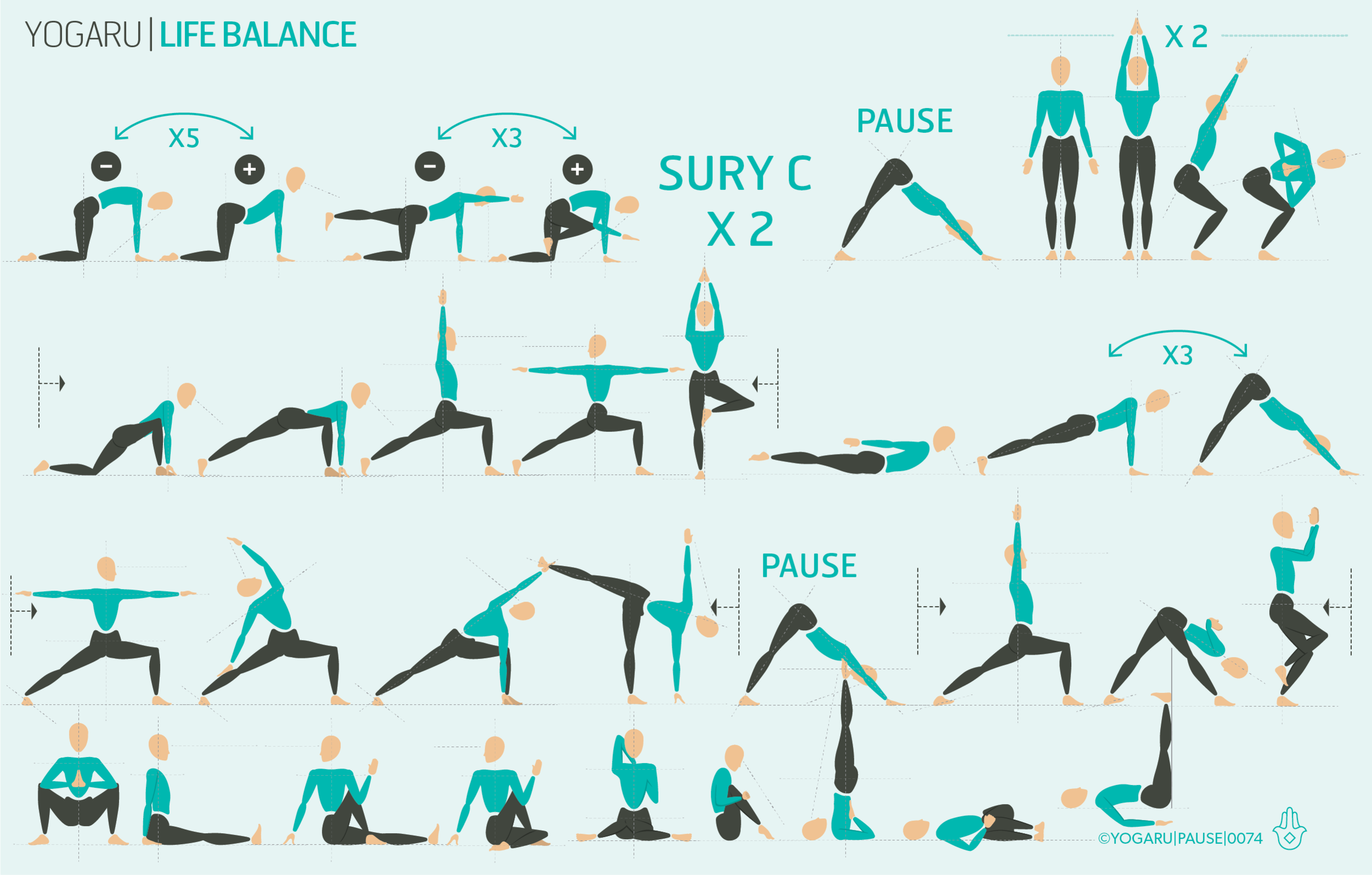
When the world around me is spinning I find comfort in simple, familiar poses during my practice – poses that I know feel safe, secure, and even conjure up a bit of inner strength to help me feel strong again. This sequence includes lots of twists to balance out the nervous system and hormone levels; some standing balances to find physical balance and carve out a groove for mental balance; and core activation to stabilise the whole body. Most of us hold more tension in one side of the body than the other. As you run through the sequence look for symmetry left and right. Actively soften both shoulders in poses where the arms are arised. Look for equal press down and effort in both legs for the standing poses.

ALIGNMENT CUES
Through this sequence look for signals as to how the poses make you feel and what you need from your time on the mat. Tune into your practice and let it support you physically and mentally:

  • Before you start you Marjaryasana/Cat Bitilasana/Cow flow take a few breaths in tabletop position and find equal weight through all four points in contact with the ground.

  • Come back to Adho Mukha Svanasana/Downward Facing Dog in between flows to consciously look for your symmetry again.

  • In Utkatasana/Chair stay more upright and lengthen through the crown, take your twists in this position with the hands in prayer position at your heart.

  • When you are in Anjaneyasana/Low Lunge with the knee on the ground, and off the ground, contain and support the stretch of the inner groin and hip flexor by lightly pressing your feet/knee into the ground and scissoring them together. Lift you pelvic floor here.

  • In Virabhadrasana II/Warrior II press strongly into your front heel and keep this connection as you move into Reverse Warrior.

  • Explore a wide legged Virabhadrasana I/Warrior I with the feet mat distance apart. Notice if this makes a difference to you hip bone position.

To save the images for personal use click and hold down the image until the ‘save image’ option appears; on Mac hold down ‘control’ and click the image to get the option box; on PC right click on the image to get the option box. Scroll down in the ‘option box’ and click ‘save image’.

Ruth Delahunty Yogaru

A simple home practice

PAUSE_0072.png

LOOKING FOR CALM
The kiddies are all back to school and so far so good! I have learnt from previous years that I am inclined to turn 'headless chicken' in September, and have planned and prepped to within an inch of my life! Without consciously choosing to, I’m also finding myself shifting towards calming and supportive poses in my yoga practice – such as forward folding poses. Forward folds don’t come naturally to me, they challenge my ego and patience, but they are deeply therapeutic and soothing, and my intuition brings me to them when I need them. I’m also finding comfort in familiarity by spending extra time in some of the basic poses of yoga. When the world around you is spinning fast, it feels lovely to do the complete opposite on your mat and simplify your practice to its utmost essence.

FIND YOUR HAPPY POSE
This sequence focuses on keeping it simple and playing around with as many of the familiar poses of yoga as possible. When you encounter a pose that feels perfect to you, either in finding your strength or finding ease, pause for some extra breaths and enjoy the sensations that arise. Scan through your body from your toes to the tips of your crown and look for feedback.

EXPLORING SIMPLICITY IN YOUR PRACTICE
Notice the effects different types of movements have on you. When you flow you will notice a calming, meditative trance, as you link movement with breath. In deep stretching poses you will feel a calm introspective quietning of the mind. Alternatively the more muscular strengthening poses will bring you into the body, and the present moment, with nowhere to hide! In order to feel the cumulative benefits of this sequence, and get a sense of serenity in familiarity, practice this same sequence for 2-3 weeks. If practicing everyday is daunting for you, start with aiming for a 2-3 days a week, for 10-15 mins, and let it naturally build it up from there.

ALIGNMENT CUES
Adho Mukha Svanasana/Downward Dogs is probably one of the more widely known yoga poses. But we often use it as a transition and not give it enough time to explore. Relook at how you approach your Adho Mukha Svanasana/Downward Dogs and see is it one, or can it become one, of your familiar comforting poses.

The following are some alignment cues that you might hear in class. Print them out, along with the sequence, and play around with what makes sense to you:

  • Hands shoulder width apart, feet hip width apart, press into all five knuckles of your hands and lightly though the pads of your fingers, fingers spread.

  • Roll your biceps forward, broaden the collarbones, back of the neck long, firm your shoulder blades against your back, head in line with your ears.

  • Pelvis tips forward, lift your sit bones up, stretch your heels towards the ground, draw your hips up and back.

  • Top of the thighs pressing back, roll your inner thighs back. Hug your outer hips to the midline, gaze to the ground under your pelvis.

  • Draw your navel towards your spine to support the internal organs.

  • Look for symmetry of the whole body between right and left side joining at the midline.

To save the images for personal use click and hold down the image until the ‘save image’ option appears; on Mac hold down ‘control’ and click the image to get the option box; on PC right click on the image to get the option box. Scroll down in the ‘option box’ and click ‘save image’.

Ruth Delahunty Yogaru

Staying present

PAUSE_0071.png

IN THE HERE AND NOW
Staying present is a topic we're all very familiar with. Being present in this very moment, in this minute, in this hour, in this day, in this week, in this month, and even in this season, can often be the most challenging aspect to yoga, meditation and life! As the summer draws to an end I feel myself drifting into anxious anticipation of September mayhem. I’m finding it hard to stay in the here and now and appreciate the last few weeks of warmer weather and longer days.

EXPLORING STAYING PRESENT IN YOUR PRACTICE
In our time on the mat we are faced with the same challenge of staying present and not getting lost in endless ‘to do’ lists. Through our practice we can take up this challenge and cultivate a presence that will help us off the mat too. Staying close to the breath is the ultimate tool for finding the here and now. There is no future or past breath – just the present breath. By linking the breath with movement, in a series of mini flows, this sequence brings you close to your breath. You’ll also notice you become very present in your practice when you pause in some of the poses that challenge you – standing poses that activate the large muscles of the legs, or seated poses which test your patience for your perceived level of flexibility. Take a few extra breaths in your not so favourite pose and see where your mind is. Loosen your attachment to what you think the external pose 'should' look like and concentrate on lengthening out your breath, pause, and find small shifts in your relationship to these poses.

SAVASANA ALIGNMENT CUES
Successfully staying present on your mat is a much more intense practice – physically and mentally. Reward yourself with a nice long Savasana and run through some of these alignment cues as you relax:

  • In Savasana place your hands under your lower back and slice your buttocks flesh away from you to soften into the lower back.

  • Melt your shoulders away to the floor and tuck your chin slightly to lengthen the back of the neck.

  • Release any tension in your jaw, part your lips part slightly and let your eyeballs become heavy into the back of your head.

  • Imagine skin on your forehead becoming as smooth as silk and the space between you temples become broad and spacious.

  • As the back of your head become heavy into the ground, let your whole body become heavy and supported between the ground underneath you and gravity.

To save the images for personal use click and hold down the image until the ‘save image’ option appears; on Mac hold down ‘control’ and click the image to get the option box; on PC right click on the image to get the option box. Scroll down in the ‘option box’ and click ‘save image’.

Ruth Delahunty Yogaru