
Sequences

Strong back body

PAUSE_0051.png

THE FORGOTTEN BACK BODY
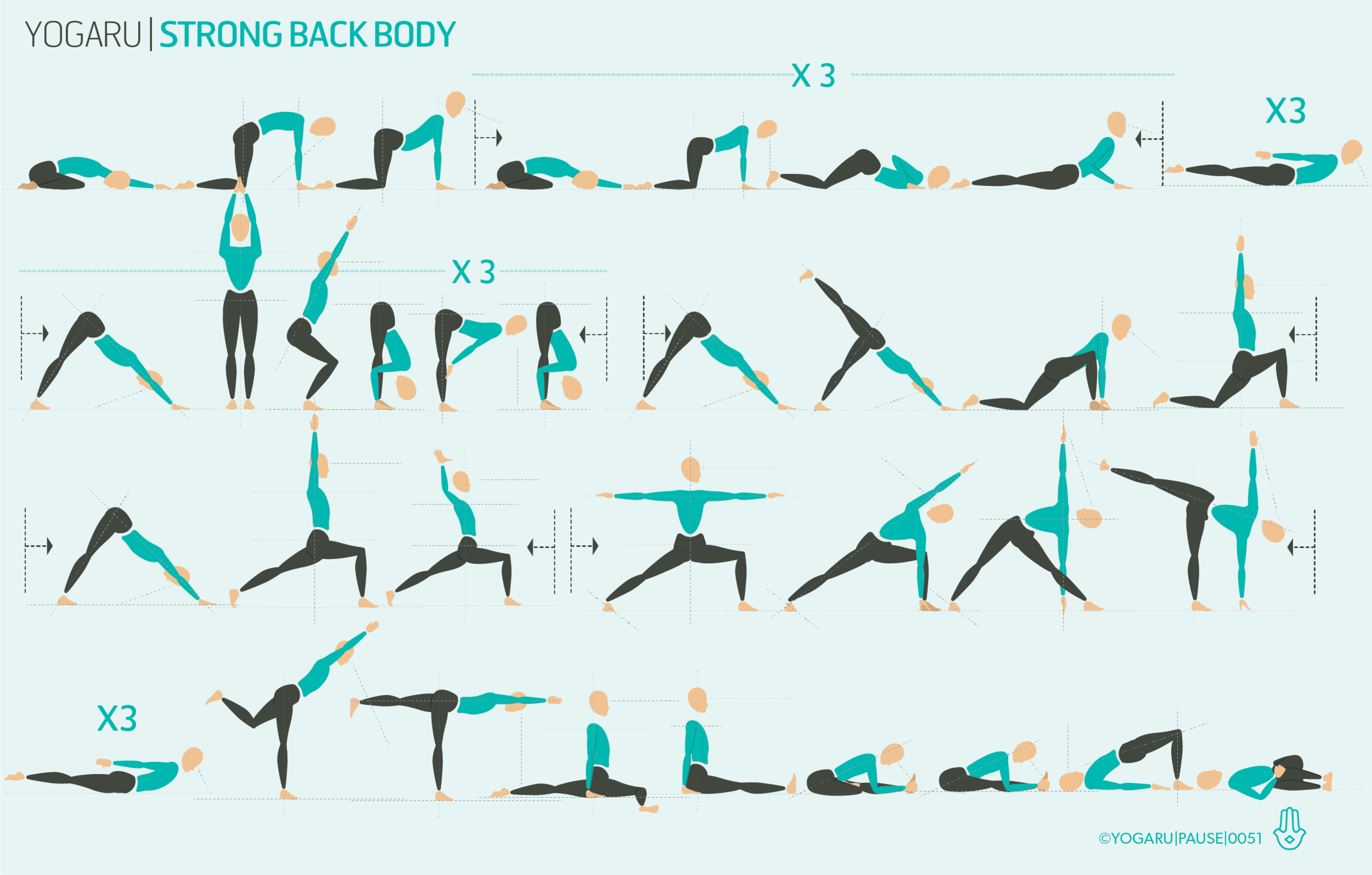
With the winter nip in the air you start to notice how much the body closes in to protect itself against the colder weather. The muscles of the spine were created to keep us upright. They become weakened from sitting for long periods of time, and as a result, don’t have the strength to do the important job of stabilising against gravity as we move. Strengthening the back body in yoga helps to keep an upright posture, counteracting curled in shoulders, a hunched back, and helps prepare the lower body for safer forward folds. Following on from my upper back strength sequence I started to explore down the full length of the back body – adding the lower back, glutes, outer hips, hamstrings and calf muscles. When we visualise our bodies we think of our front body, and the poor back body often gets ignored. If we gave our back body a bit more love and attention we might be better equipped to avoid back pain, hip instability, and pulled hamstrings.

STRENGTHEN TO STRETCH
For a long time I thought that to stretch the back body you need to do lots of forward folds. Not necessarily so! Before you stretch out a muscle you need to strengthen it first to warm it up, wake up the connective tissues, and bring fresh blood to the muscles. Strengthening is not to be confused with tightening a muscle. Tightness comes from repeated strengthening with no stretching. There is so many variations of posture in yoga that every muscle is being stretched and strengthened during your time on the mat. Taking a poses like Salabhasana/Locust will strengthen the whole back body before going into deeper forward folds. Utkatasana/Chair will wakes up the strong muscles of the legs, outer glutes and the outer hips. With the arms raised you are also working the muscles of the back and shoulders. Hold the poses till you feel the muscles working to create stability and strength. You will find the whole back body more receptive to opening up to forward folds when you have warmed it up, and switched it on first.

DOWNWARD DOG
After warming up the back body with Salabhasana/Locust and Utkatasana/Chair, spend plenty of time in Downward Dog to ease into any deeper forward folds. It will start to gently lengthen out the back of the legs and stretches out the upper back and shoulders. Work on tipping the pelvis forward towards your upper thighs and reaching your sit bones up high. There are three rounds of the downward dog flow in the above sequence. Place your feet mat width for your first round, hip width for the second, and all going well, together for the third round. You’ll notice the closer the legs are together the more of a stretch is required in the backs of the legs. Taking chair pose with the legs at different widths will also work slightly different hip muscles and continue to strengthen the back body between forward folds.

Try the sequence above and bring all your attention to your back body as you move through the practice.

To save the images for personal use click and hold down the image until the ‘save image’ option appears; on Mac hold down ‘control’ and click the image to get the option box; on PC right click on the image to get the option box. Scroll down in the ‘option box’ and click ‘save image’.

Ruth Delahunty Yogaru

The twist effect

PAUSE_0047.png

WHAT HAPPENS WHEN WE TWIST?
We have previously explored the cleansing effect of twists and twisting from the midline out. Twists massage the organs of the body – stimulating good digestion, removing toxins through the liver and kidneys, supporting the immune system, and relieving stress and tension. But what do the rotational muscles of the core need to do to facilitate these benefits?

LOOK FOR THE STRENGTH IN YOUR TWISTS
Twists stretch and strengthen the full circumference of the core and the spinal muscles. When we are twisting, we naturally notice the stretch effect in the side body, on the opposite side we are twisting to. In a twist, to every stretch effect there is a strengthen effect. The muscles on the side we are twisting to contract to facilitate this stretch. The next time you take a twist in your practice, try consciously contracting these muscles, and notice how they help you to twist a little further, and find a little more stretch, on the opposing side.

STANDING TWISTS
Aided twists, which use the help of an elbow pressing against a knee or a hand pressing into the ground, help to get a deeper stretching twist, but don’t work quite as much into the strengthening element of the twist. Unaided twists, which are twists that work without an anchor to facilitate your twist, may not feel as satisfyingly deep a twist, but are working the stretching and strengthening muscles equally. When you come to practice Parivrtta Utkatasana/Revolved Chair and Parivrtta Ashta Chandrasana/Revolved Eight Cresent Moon in the above sequence, try hovering your elbow above the knee to activate these deep twisting muscles.

SEATED TWISTS
In your seated twists explore both sit bones grounded and then allowing the opposing sit bone to lift slightly, and notice how it affects your twist. When twisting to the right, and the sit bones are grounded, you will feel a stretch coming from the base of the spine and a strong stretch in the outer left hip. When you allow the left sit bone to lift slightly, and the hips to follow the twist, it gives you a false sense of a deeper twist, but it helps you to take the spinal twist more comfortably if you have tight hips or any sacroiliac issues.

Print out the above sequence, and explore the strengthening sensations in the side you are twisting to. Click this link to get a full list of twists.

To save the images for personal use click and hold down the image until the ‘save image’ option appears; on Mac hold down ‘control’ and click the image to get the option box; on PC right click on the image to get the option box. Scroll down in the ‘option box’ and click ‘save image’.

Ruth Delahunty Yogaru
Upper back strength

WHAT MAKES GOOD POSTURE
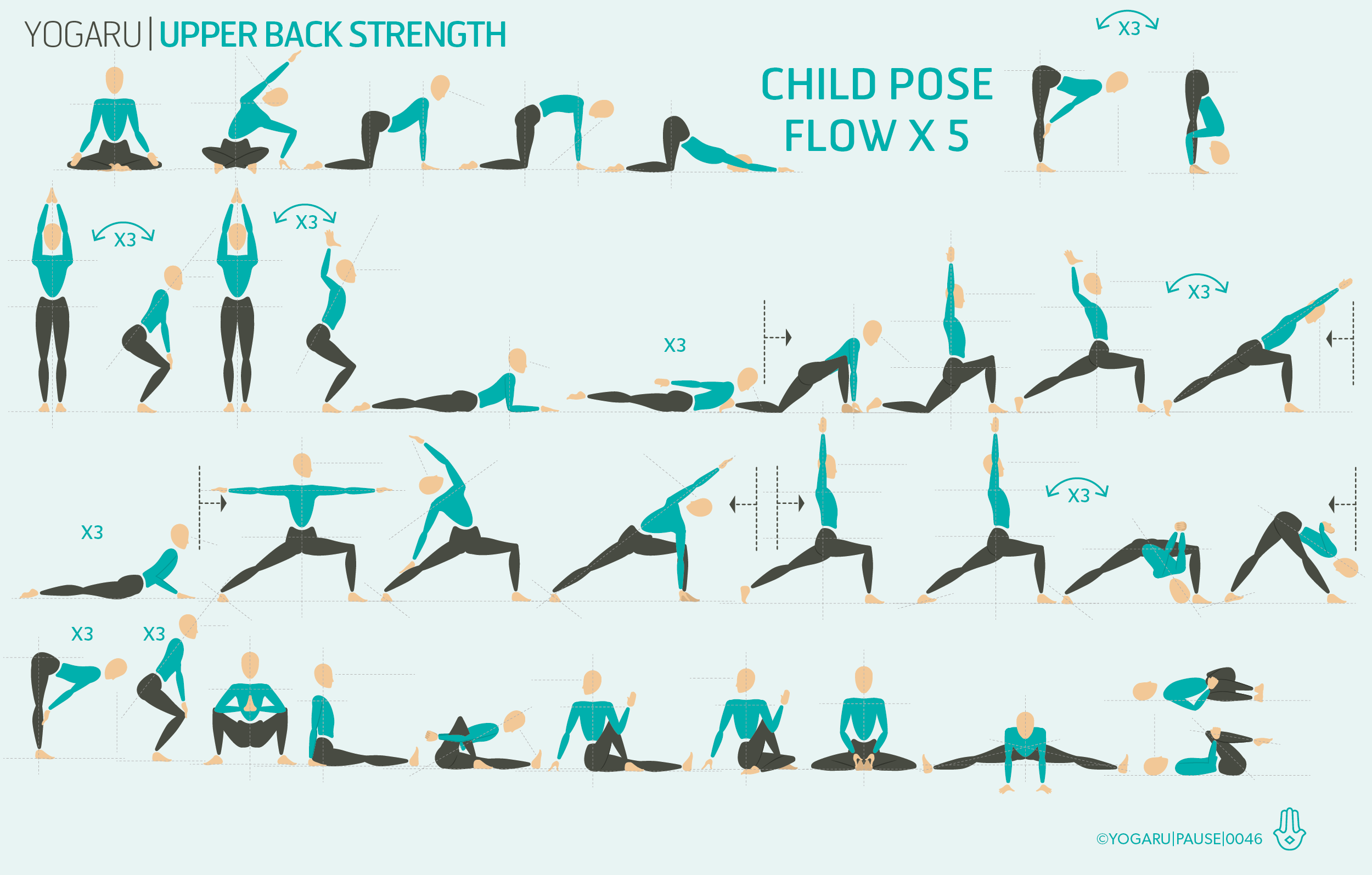
I’ve become very aware recently of my posture. As a yoga teacher, and practitioner, I judge myself when I catch my shoulders hunching, or my lower spine rounding in a seated position. It led me to investigate which asana help to build, and maintain, good posture in the practice of yoga.

OUR EVERYDAY POSTURE
The average person, sitting for hours at their computers, are rarely in a beautifully upright position – with the pelvis perfectly perpendicular to the seat, and their shoulders stacked over their hips. Even as we move through our day, our shoulders are often leading the way, with our upper back curved forward, in a hurry to get to our next appointment. Backbends stretch the front body, open the shoulders, stimulate the nervous system and lift your spirits. All backbends stretch the front body, but backbends that use the weight of the body against gravity, to strengthen the upper back, help to maintain this chest opening beyond your time on the mat.

STRONG BACK – HEALTHY BACK
Salabhasana/Locust is not an asana you’ll see much on Instagram, and some yogis find the breath quite challenging when the diaphragm is being pressed, but there is lots happening in this unassuming asana. The whole back body is strongly working to lift the weight of the body against gravity; the weight of the body is pressing and massaging the organs of the abdomen – aiding digestion and detoxification, boosting the immune system, easing constipation, and easing mental fatigue.

Ardha Uttanasana/Half Forward Bend also uses the upper back against gravity when done with awareness. Place the palms of your hands on your upper shins, use your arms to help reach your sternum forward and up, and feel the upper back working. If you have tight hamstrings this will be a great way to warm them up before any deeper Forward Bends. Like with Salabhasana/Locust, I have found huge benefits from spending more time in these two asana in my daily practice recently.

EXPLORING UPPER BACK STRENGTH IN YOUR PRACTICE
In your next practice try coming all the way down to the ground and taking Salabhasana/Locust instead of Bhujangasana/Cobra or Urdha Mukha Svanasana/Upward Facing Dog. Print out the above sequence to get a sense for what upper back strengthening feels like in your spine.

To save the images for personal use click and hold down the image until the ‘save image’ option appears; on Mac hold down ‘control’ and click the image to get the option box; on PC right click on the image to get the option box. Scroll down in the ‘option box’ and click ‘save image’.

Ruth Delahunty Yogaru