
Sequences

Staying present

PAUSE_0071.png

IN THE HERE AND NOW
Staying present is a topic we're all very familiar with. Being present in this very moment, in this minute, in this hour, in this day, in this week, in this month, and even in this season, can often be the most challenging aspect to yoga, meditation and life! As the summer draws to an end I feel myself drifting into anxious anticipation of September mayhem. I’m finding it hard to stay in the here and now and appreciate the last few weeks of warmer weather and longer days.

EXPLORING STAYING PRESENT IN YOUR PRACTICE
In our time on the mat we are faced with the same challenge of staying present and not getting lost in endless ‘to do’ lists. Through our practice we can take up this challenge and cultivate a presence that will help us off the mat too. Staying close to the breath is the ultimate tool for finding the here and now. There is no future or past breath – just the present breath. By linking the breath with movement, in a series of mini flows, this sequence brings you close to your breath. You’ll also notice you become very present in your practice when you pause in some of the poses that challenge you – standing poses that activate the large muscles of the legs, or seated poses which test your patience for your perceived level of flexibility. Take a few extra breaths in your not so favourite pose and see where your mind is. Loosen your attachment to what you think the external pose 'should' look like and concentrate on lengthening out your breath, pause, and find small shifts in your relationship to these poses.

SAVASANA ALIGNMENT CUES
Successfully staying present on your mat is a much more intense practice – physically and mentally. Reward yourself with a nice long Savasana and run through some of these alignment cues as you relax:

  • In Savasana place your hands under your lower back and slice your buttocks flesh away from you to soften into the lower back.

  • Melt your shoulders away to the floor and tuck your chin slightly to lengthen the back of the neck.

  • Release any tension in your jaw, part your lips part slightly and let your eyeballs become heavy into the back of your head.

  • Imagine skin on your forehead becoming as smooth as silk and the space between you temples become broad and spacious.

  • As the back of your head become heavy into the ground, let your whole body become heavy and supported between the ground underneath you and gravity.

To save the images for personal use click and hold down the image until the ‘save image’ option appears; on Mac hold down ‘control’ and click the image to get the option box; on PC right click on the image to get the option box. Scroll down in the ‘option box’ and click ‘save image’.

Ruth Delahunty Yogaru
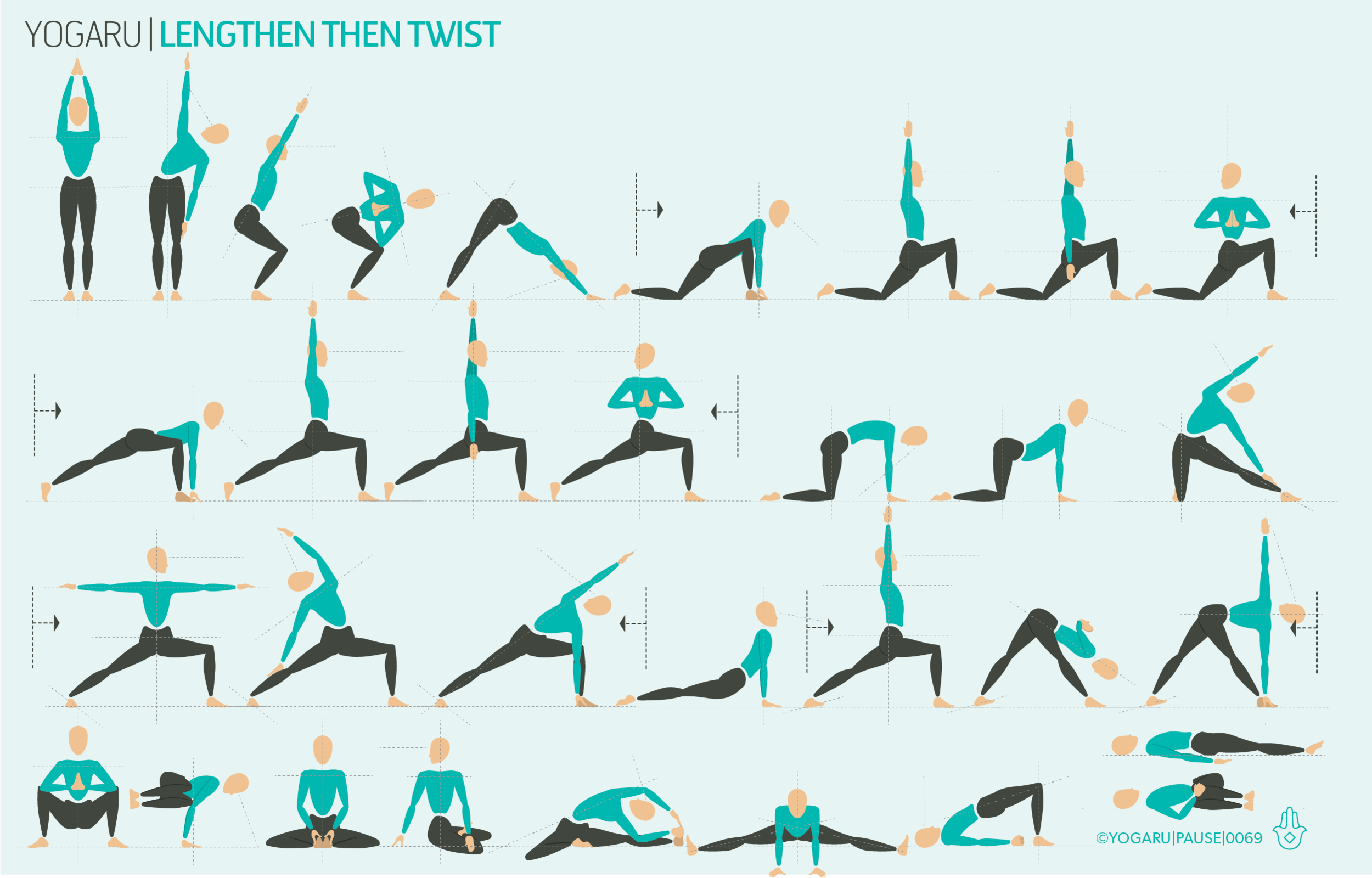
Lengthen then twist

PAUSE_0069.png

SUMMER CLEANSE
Holiday are all about tasting regional specialities and immersing yourself in the local culture. This may mean that you are sampling foods that are not usually part of your diet. I sometimes find that on my return it takes a few weeks to reclimitise to my regular home routine. This year, with a touch of post travel tiredness and headaches, I embarked on a mini cleanse to reboot my system and reinvigorate my savoury gut microbiome. I practices my Gutsy Flow everyday and followed the Rich Roll cleanse for five days – which included 100% veg smoothies, mushroom broths, chlorella and lots of water. After the cleanse I noticed a spectacular increase in my energy levels, clarity of mind and fluidity of movement. I was bouncing out of bed at 5:30am to teach my morning class and was still awake at 9:30pm which is very unheard of! The cleanse encourages you to write notes on each day of your cleanse. My day five note to self was:

GOOD FOOD = ENERGY = HAPPINESS   

TWISTS
Twists wring out the digestive system and massage the digestive tract. In yoga we twist to the right first to stimulate the ascending colon first, and we twist to the left after to stimulate the descending colon – aiding regular elimination and toxin removal from the body. Similar to backbends, when we twists we constrict the blood flow, and on releasing a surge of blood rushes back – bringing with it a fresh supply of oxygen and flushes out the system. Click this link to get a full list of twists.

FIND LENGTH FIRST
This sequence takes a step back from twists and looks at what you can do before you twist to maximise the rotation in the spine. When you twist a piece of cord you’ll notice that the more you twist it the shorter the cord gets. The same thing happens in the spine as you twist. You may reach an end point where you hit vertebrae to vertebrae before you reach the limitation of your muscle stretch. Lengthening up the spine through side bends first, and lifting the torso up out of the deep pelvic bowl, helps to find extra space between the vertebrae before you take your twist.

EXPLORING LENGTHENING THEN TWISTING
After you take your side bend make sure you come back to centre first before you move into the twist. When you are in a twist play around with placing the hand of the side you are twisting to on the small of your back and feeling for the position of your pelvis. Can you keep the hips squared forward to the front of the mat rather than following the rotation of the twist. See can you sense if both hips are level to each other too. The hip on the side you are twisting to can sometimes lift up which shortens the side of the waist and limits your twist.

ALIGNMENT CUES
Print out this sequence and explore the difference taking a side bend first can make to your twisting practice:

  • In Utkatasana/Chair Pose check to see are the knees in line with each other or has the twisting side knee drifted back.

  • In Anjaneyasana/Low Lunge & Ashta Chandrasana/Eight Crescent Moon notice how much harder it is to twist without the aid of something to press against.

  • Parivrtta Trikonasana/Revolved Triangle is a very deep twist for the spine. Place your hand on your lower back and check to see is the top of the pelvis level and both left and right sides are in line with each other. Use a brick on the high level to help you keep the pelvis level and stable.

  • If Balasana/Crow Pose is not part of your practice take the preparatory stage and you’ll get a lovely twist through the spine without having to master the full arm balance.

Remember to drink plenty of water after a twisting sequence to help the system flush out all the toxins from the organs.

To save the images for personal use click and hold down the image until the ‘save image’ option appears; on Mac hold down ‘control’ and click the image to get the option box; on PC right click on the image to get the option box. Scroll down in the ‘option box’ and click ‘save image’.

Ruth Delahunty Yogaru

Gutsy flow

SUMMER DEHYDRATION
During the summer months it can be hard to stay well hydrated. The body is constantly perspiring to regulate your body temperature, and even if you are drinking plenty of water you can still end up feeling a bit dehydrated. The recommended amount of water per day varies – depending on how much exercise you do, and if you have eaten enough fruit and veg. In general aim for a minimum of 2 litres per day, which is about 8 glasses of water.

THE EFFECT OF STRESS
Stress can also be the root cause of constipation. When the body goes into fight or flight mode all the blood rushes from the organs to our extremities ready for action. This means that the organs of the body, the digestive system included, have a reduced blood supply and are not working optimally. Yoga reduce stress by stimulating the parasympathetic nervous system through breath awareness; slow mindful movement; and repetitive flows – which allows the mind to quieten and bring increases blood flow to all the organs of the body again.

There are many different reasons why you might be feeling bloated or constipated. This gutsy flow sequence will benefit you, regardless of the cause, if you find your bowel movements are a bit sluggish, or to keep everything moving and prevent getting constipated. As the saying goes ‘prevention is better than cure’. The specially chosen asana promote good gut health by stretching and compressing the whole digestive system.

BACKBENDS
Backends place pressure on your gut and stimulate peristalsis in the muscles of the colon which help to push waste food along. They also compress the blood vessels of the digestive system, and on releasing the backbend, bringing a rush of fresh blood flow to help remove toxins. Click this link to get a full list of backbends.

TWISTS
Twists wring out the digestive system and massage the digestive tract. In yoga we twist to the right first to stimulate the ascending colon first, and we twist to the left after to stimulate the descending colon – aiding regular elimination and toxin removal from the body. Similar to backbends, when we twists we constrict the blood flow, and on releasing a surge of blood rushes back – bringing with it a fresh supply of oxygen and flushes out the system. Click this link to get a full list of twists.

EXPLORING STAYING REGULAR IN YOUR PRACTICE
This sequence will help to stimulate the walls of the gut and bowels. It is best not to drink water during your practice so that the body is not trying to multi task. As soon as you have finished drink plenty of water to help all the good work you have done on your mat.

ALIGNMENT CUES
Print out the above sequence and have it at hand for those mornings when you feel your bowel movements have slowed down, or if you ate late and feel you’re digestive system is still struggling to process last night’s dinner:

To save the images for personal use click and hold down the image until the ‘save image’ option appears; on Mac hold down ‘control’ and click the image to get the option box; on PC right click on the image to get the option box. Scroll down in the ‘option box’ and click ‘save image’.

Ruth Delahunty Yogaru