

SUMMER CHALLENGES
Summertime brings with it longer days, plenty of fresh air and a general mood of happiness. It can also bring up some challenges staying with your yoga practice – whether it’s finding time to get to a studio classes, or keeping your home practice going. Remember little and often is better than none at all. Even if it’s just 5 mins of your favourite Surya Namaskara/Sun Salutations first thing in the morning to wake up your circulation, metabolism, and set you up for the day ahead. Summertime might just be the right time to try out establishing your home practice and bringing a travel mat with you on holidays.
TRAVEL FRAZZLES
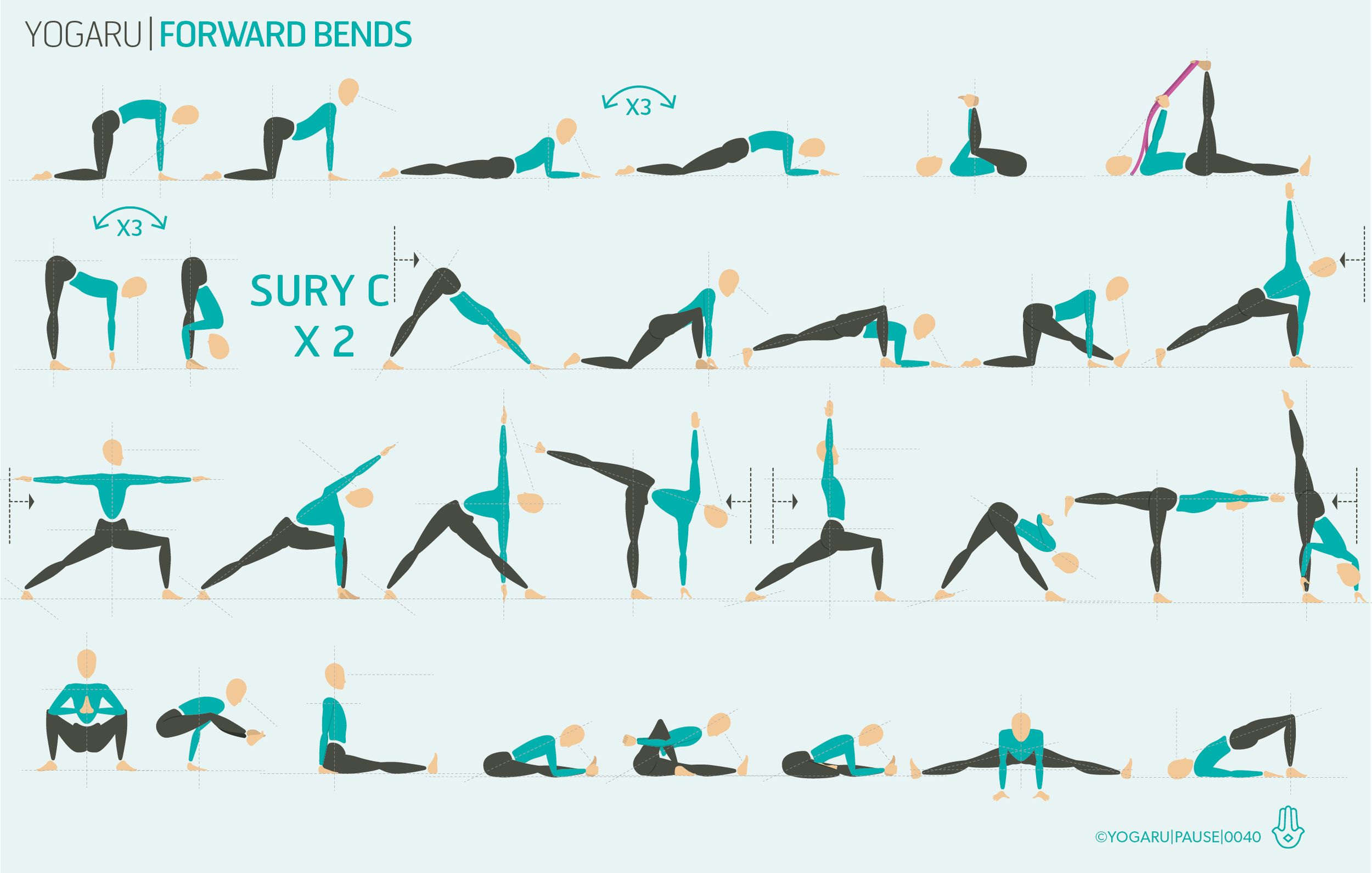
Travel can be hard on the system, and takes a bit of time to find your feet. As soon as you reach your destination take your shoes off and stand in Tadasana/Mountain to re-establish your connection with the earth – especially if you've traveled by plane or boat. Your yoga practice helps you to rebalance your system and counteract the post travel frazzle. The sequence above can help to do just that. With some gentle backbends, twists and hip openers, the sequence has a bit of everything.
Travel impacts everyone in different ways. Below is a list of some of the travel related benefits of yoga, and some of the asana that you might like to spend a bit more time on in the sequence.
Stiff back from sitting or carrying luggage – Cat/Cow to lengthen the spine; twists to wring it out; prone (face down) backbends to strengthen and realign the spine.
Tight shoulders from sitting or carrying luggage – standing asana with arms raised to get the blood flowing; Gomukhasana/Cow Face arms to stretch the fronts of the shoulders; Garudasana/Eagle arms to stretch the backs of the shoulders.
Tight hips from sitting – back leg in lunges, Virabhadrasana II/Warrior II and Trikonasana/Triangle to stretch out the hips flexors; prone (face down) backbends to lengthen the whole front body; Eka Pada Rajakapotasana/Pigeon to stretch the outer hips; Vrksasana/Tree and Malasana/Squat to stretch the inner groin.
Light headed or disconnected from your grounding – Vrksasana/Tree and Garudasana/Eagle to find your foundation and your centre of gravity; Malasana/Squat to bring you back down to earth.
Tired and need energy - Vrksasana/Tree, Garudasana/Eagle, backbends and inversions (remember downward dog is an inversion too).
Tired and need sleep - forward bends, seated asana, shoulder stand and legs up the wall.
HOLIDAY BALANCE
You can also use this sequence as your holiday practice to help you settle into a routine, stay well and enjoy your time away. Practicing on the beach is a lovely way to start your day and explore the benefits and challenges of having a movable surface under you. A travel mat is very handy to have, but you can practice just about anywhere without one too. If your surface isn't suitable for seated or prone/supine poses stick with the standing grouped asana in the sequence.
You might also find your gut takes a holiday too, and decides to slow down or stop altogether! I’m a very routined person, which works for the rest of the year, but when I’m away from home different foods and a warmer climate impact on my gut, and leave me feeling out of sorts and dehydrated. Plenty of water, a gentle twisting practice, and some pranayama if it’s part of your practice, will help you acclimatise to a new holiday routine, keep things moving, or get things moving again if you find travel has already slowed things down.
Below is a list of some of the ways practicing yoga on holidays can help to maximise your break and ensure that you return home feeling fully refreshed.
Sluggish gut – twists (particularly closed twists where your abdominal is compressed eg high lunge twist, right leg forward and prayer arms to your right knee); backbends (particularly prone backbends where the full weight of the body is pressed on your digestive system); Malasana/Squat to let gravity do its work; gently lowering your legs behind you in shoulder stand, forward bends and Ananda Balasana/Happy Baby to compress and stimulate the digestive system.
Immune boost – twists and backbends will keep the gut healthy and in turn boost the immune system as 80% of the immune system is found in the gut; inversions boost your circulation and balance your hormones which help strengthen the immune system too.
Difficulty sleeping in a strange bed - forward bends, seated asana, shoulder stand and legs up the wall will help you settle into a good night sleep.
Print out the above sequence and bring it with you on holidays, paying particular attention to any areas you feel will benefit you. Run through it from start to finish, or explore some of the grouped asana after a few rounds of Surya Namaskara/Sun Salutations.
To save the images for personal use click and hold down the image until the ‘save image’ option appears; on Mac hold down ‘control’ and click the image to get the option box; on PC right click on the image to get the option box. Scroll down in the ‘option box’ and click ‘save image’.
Ruth Delahunty Yogaru